
The 5 Basic Pilates Principles
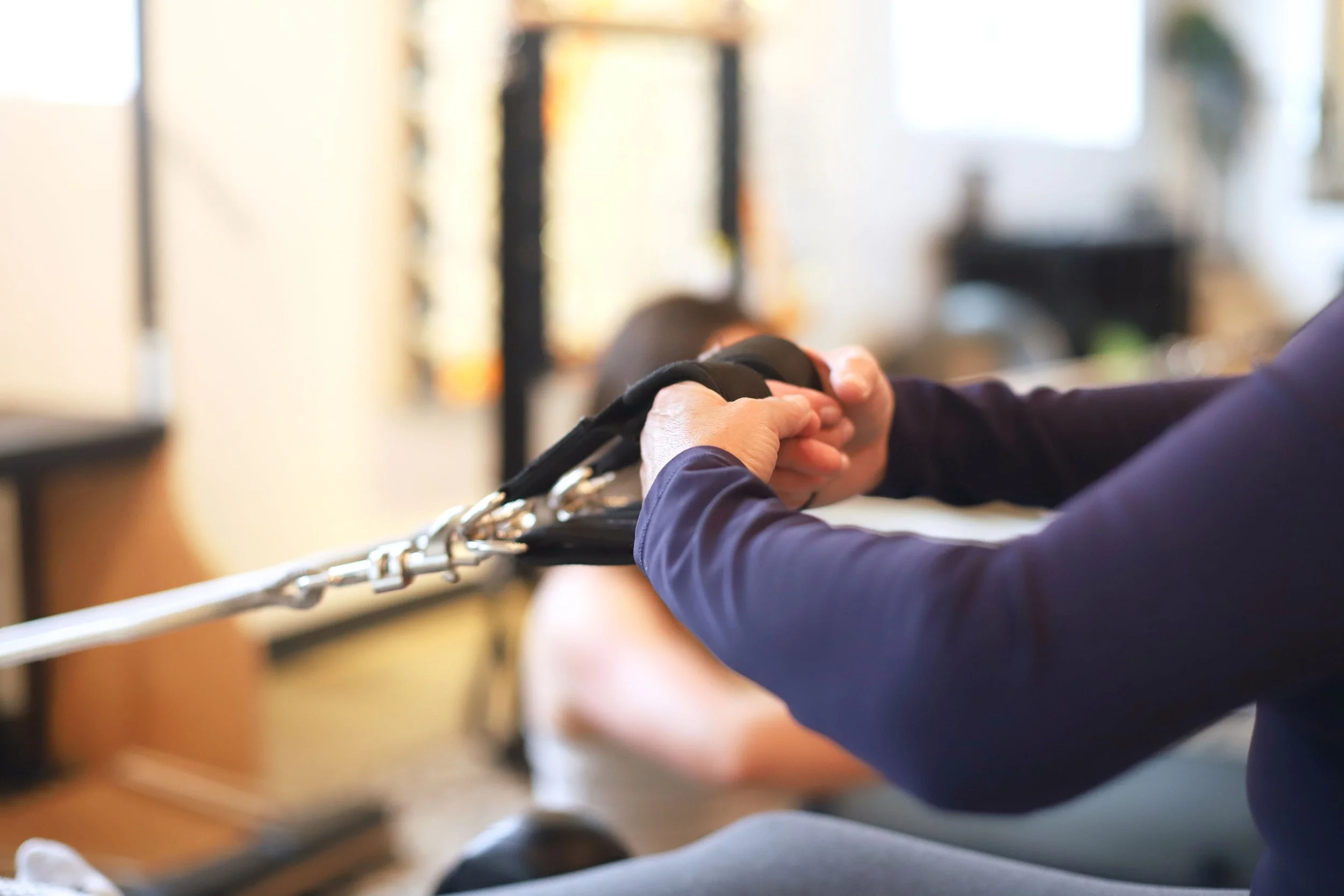
Breathing • Pelvic Placement • Shoulder Movement & Stabilization • Rib cage Placement • Cervical & Head Alignment
At Arc Pilates we believe in taking time to teach the foundation of Pilates. Without a good foundation it’s harder to move safely, build strength effectively and fully experience the benefits of the practice.
You’ll find every principle in every exercise you do, which is why they are so important to fully understand and absorb. These principles also apply to everyday life—sitting at a desk, playing your sport, lifting weights, and more. Think of them as a new way of understanding and practicing proper alignment in anything you do!
Breathing
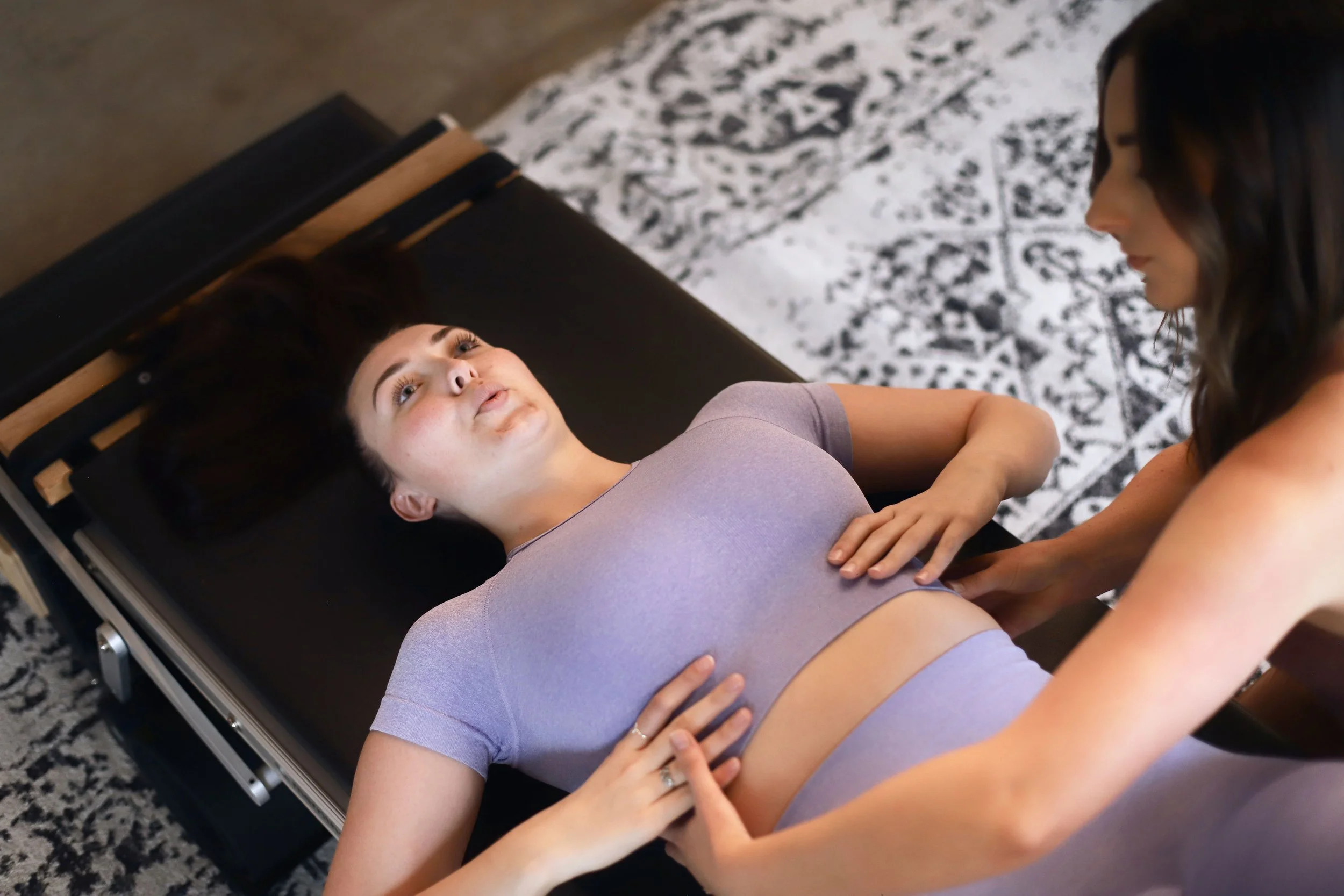
In Pilates we breathe in through the nose and out through pursed lips. Inhaling through the nose encourages full rib cage expansion and supports diaphragm movement, while exhaling through pursed lips aids in deep core activation. Breathing also helps you stay present and connect more deeply with your body during movement. At Arc Pilates, we encourage breathing with your movement.
That said, there are many great breathing techniques—sometimes simply breathing naturally is best. But one thing is certain: do breathe! ;)
Pelvic Placement
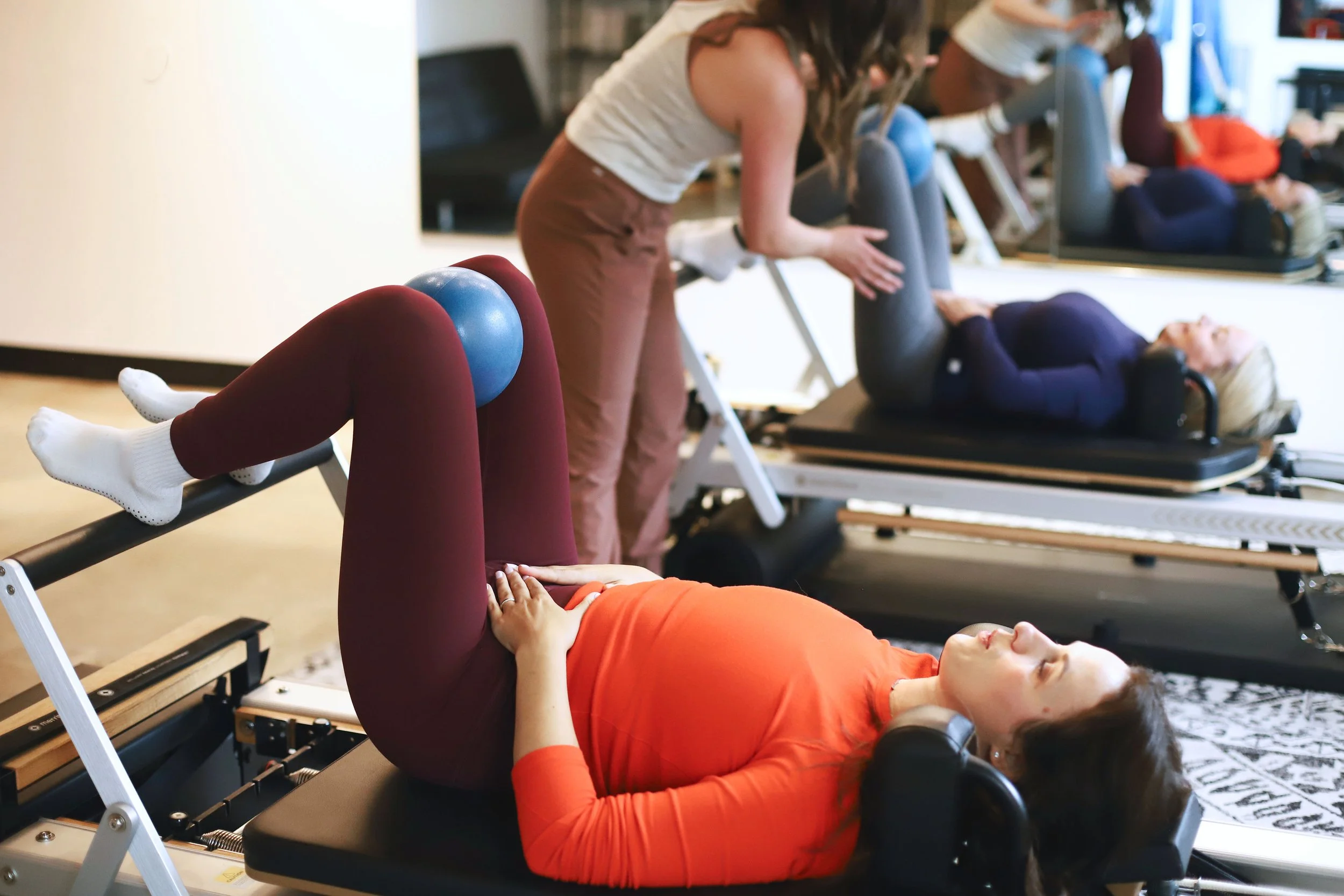
This principle is especially important because it relates to the lower back, an area that is often unstable or weak. In Pilates, the pelvis can move between two positions: “Imprint” and “Neutral.” Our approach is a contemporary take on the original method developed in the 1920s.
We generally encourage a natural spinal curve for shock absorption, but placement is always adjusted to each client’s individual needs.
Shoulder Movement & Stabilization
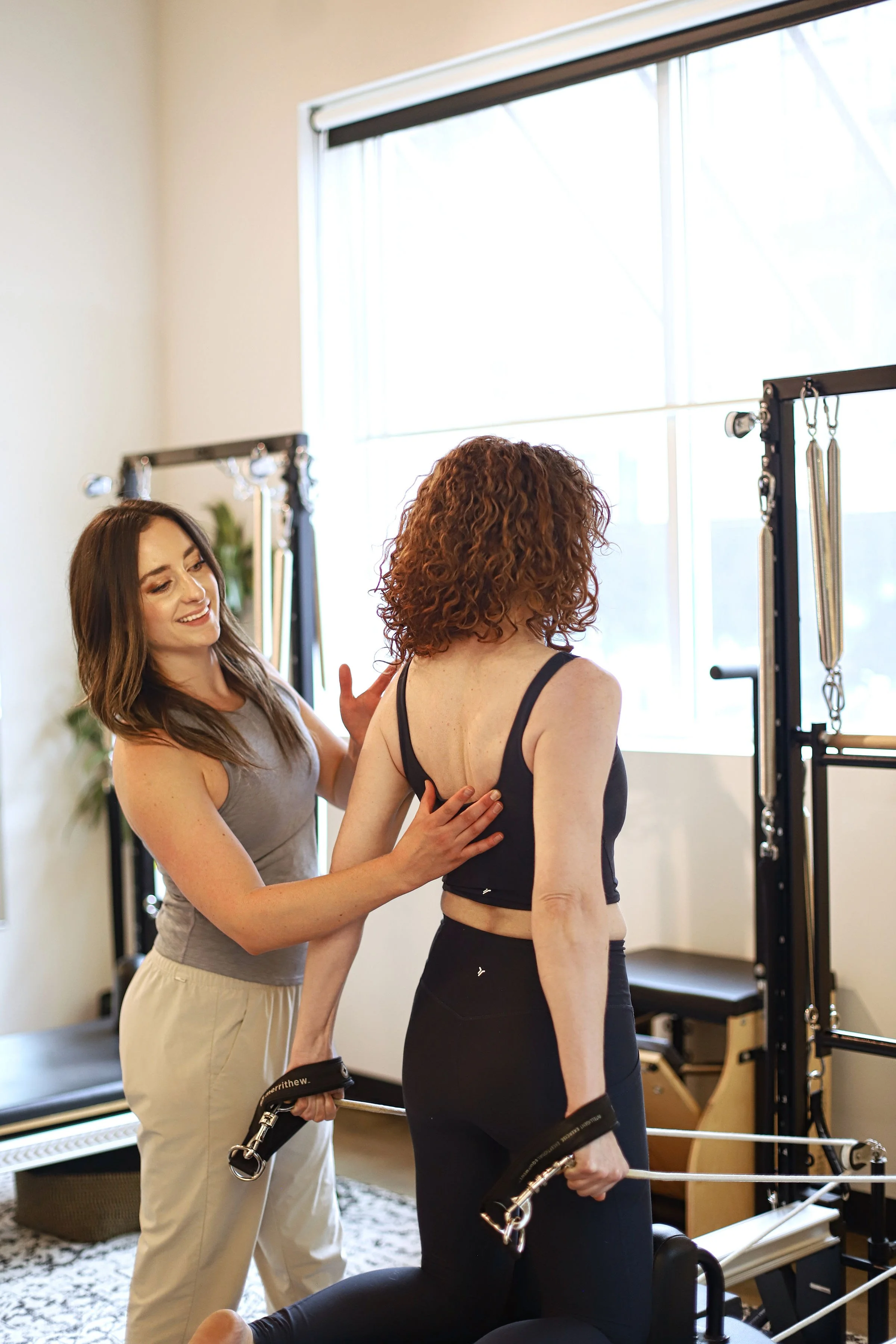
This principle is important for many reasons, particularly because the shoulder joint is highly mobile. Because of this, it’s more vulnerable to instability or injury when there is limited awareness or insufficient strength in the surrounding muscles.
So many of us are stuck at a computer all day, and addressing shoulder alignment is a key part of improving posture!
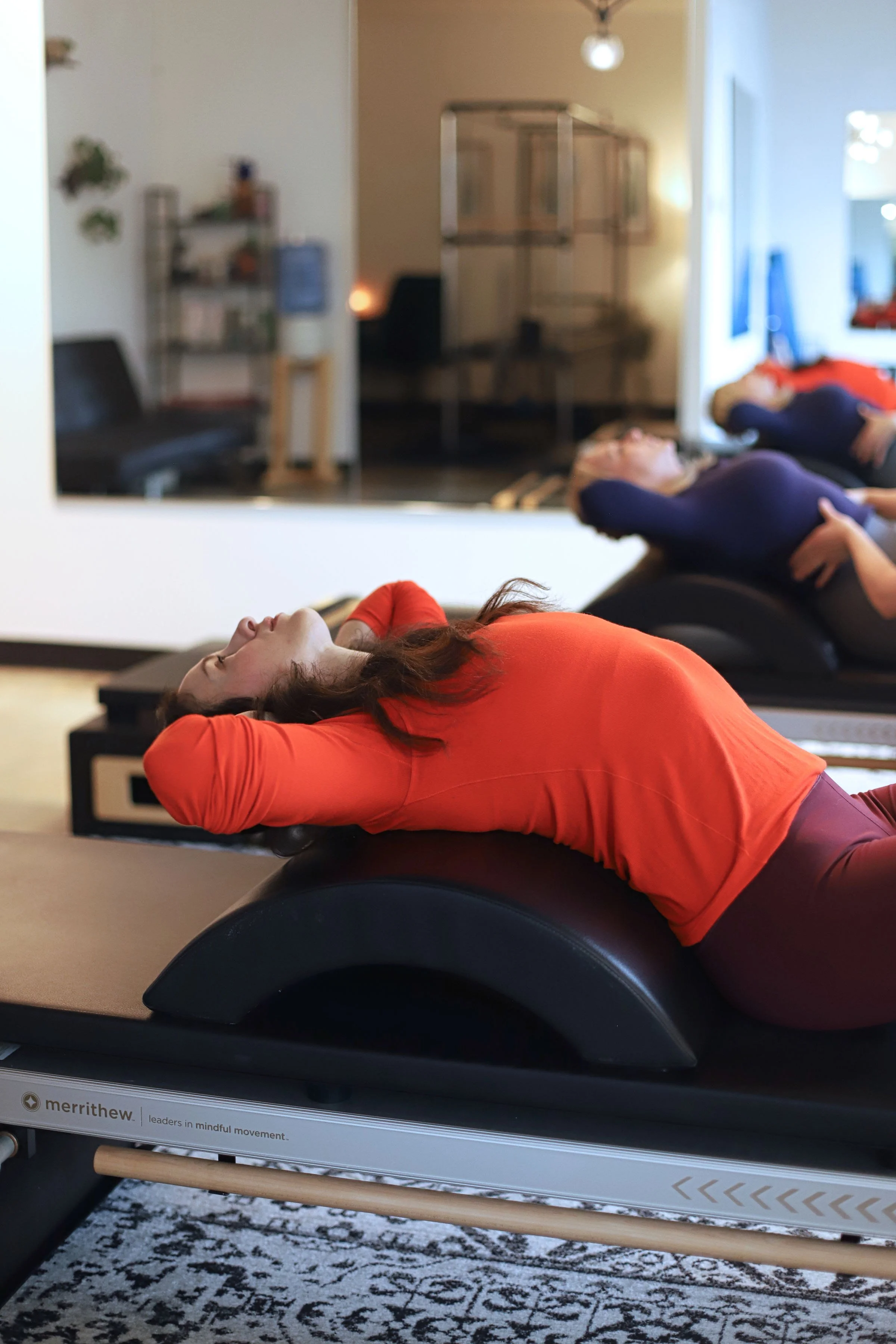
Rib Cage Alignment
As mentioned above, the rib cage is closely connected to the breathing principle, as the diaphragm sits within it. It also relates to the shoulders—both can move in unison, yet each requires its own stability at times. We help clients find neutral rib placement, as well as mobility which plays a key role in improving posture.
When lying on the back, many people tend to flare or “pop” the ribs, which can lead to overuse of the upper back. With proper rib stability, the core supports the work during each exercise instead. There is a time and place for upper back engagement, and we help our clients learn to recognize when that engagement turns into unnecessary tension.
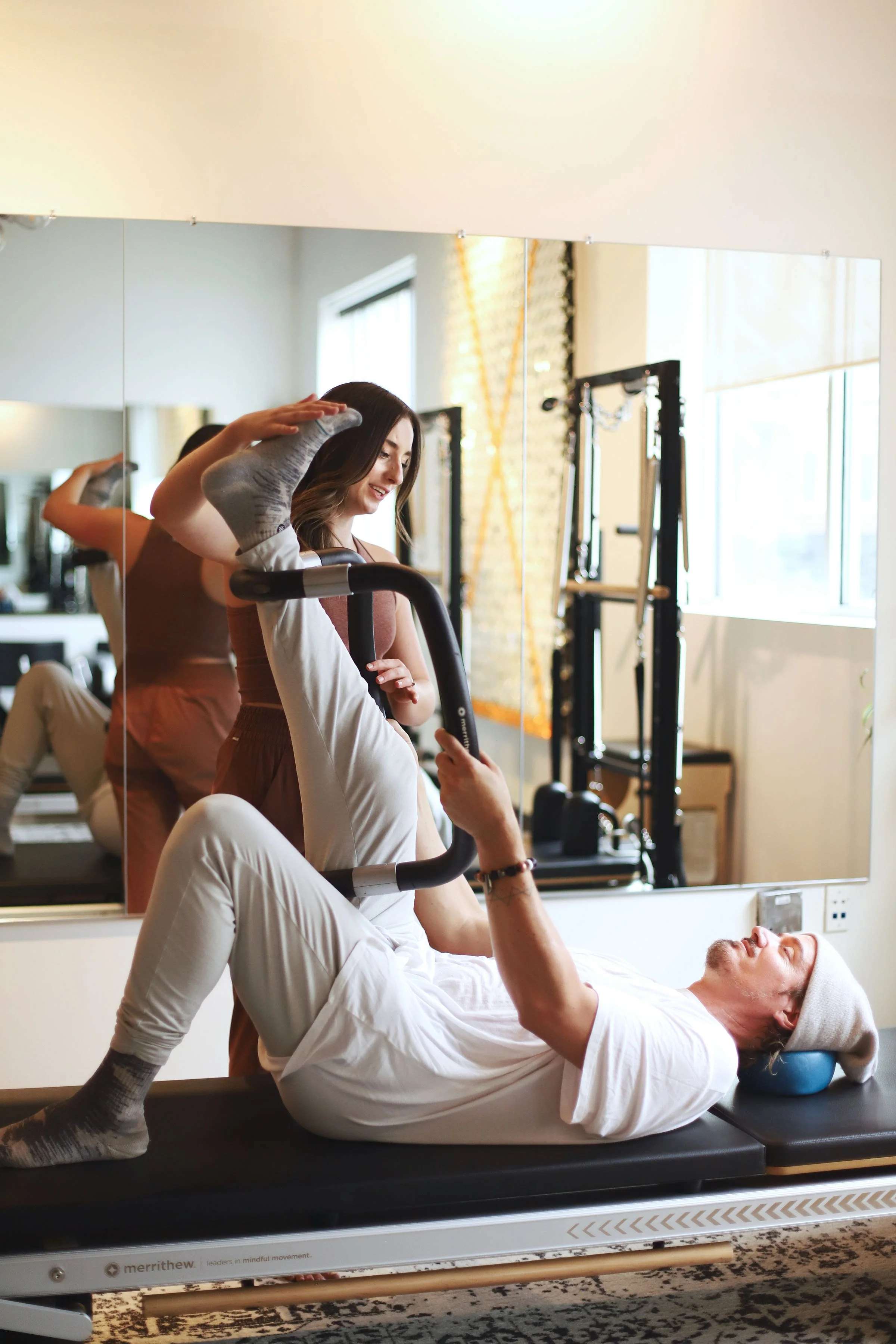
Head & Cervical Placement
During our sessions, we may use pads or pillows under the head to help align it with the upper back. Have you ever noticed that when you lie on your back, your head tends to fall backward? This can place stress on the muscles around the neck and compress the cervical vertebrae.
We focus not only on proper head support but also on teaching the correct way to lift your head off the mat during a Pilates crunch, ensuring that your core is working vs your neck. A common mistake people make!